
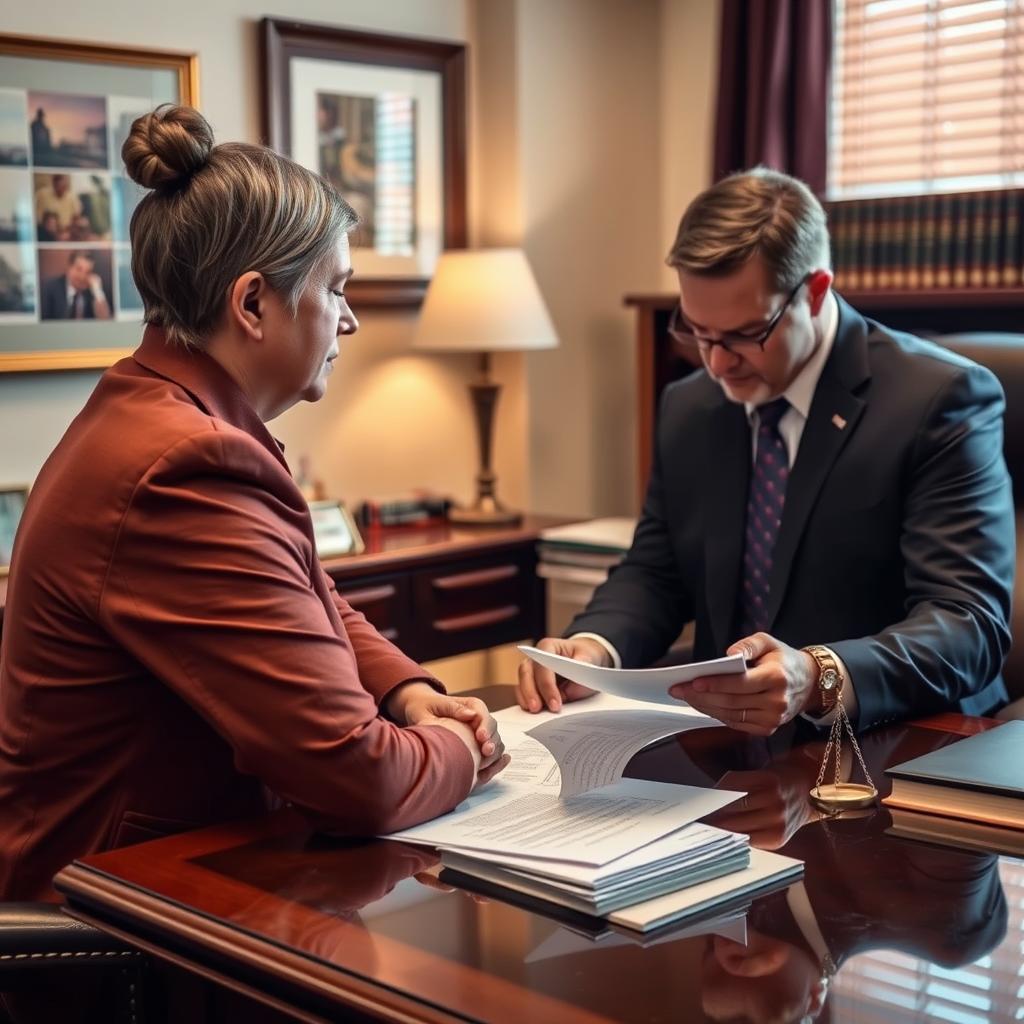
Habitual Offender Lawyer Rockingham County, VA
If you have received a notice from the Virginia Department of Motor Vehicles or a petition from the Commonwealth’s Attorney in Rockingham County seeking to designate you as a habitual offender, your driving future is at stake. A habitual offender determination can lead to a long-term revocation of your driver’s license and turn any subsequent drive into a felony offense. These proceedings are heard at the Rockingham/Harrisonburg General District Court at 53 Court Square in Harrisonburg. Having an attorney who understands how these cases are built and how to challenge them can make the difference between a devastating outcome and a favorable result. Mr. Sris is a former prosecutor who founded Law Offices Of SRIS, P.C. in 1997. He and his Of Counsel bring over 120 years of combined legal experience and 4,739+ documented firm-wide results to traffic defense and habitual offender representation in Rockingham County and throughout the Shenandoah Valley. Results may vary. To discuss your situation and learn how we can help, reach our firm at (888) 437-7747. Law Offices Of SRIS, P.C. – Advocacy Without Borders.
What Habitual Offender Proceedings Mean in Rockingham County
Virginia’s habitual offender law, codified at Va. Code § 46.2-351 et seq., establishes a civil administrative process by which a driver who has accumulated multiple qualifying traffic or criminal convictions within a defined timeframe can be declared a habitual offender. The petition is filed in the General District Court of the jurisdiction where the driver resides — in this case, the Rockingham/Harrisonburg General District Court. The court can issue an order that revokes the individual’s driving privilege for a period of years and imposes strict conditions. Once designated, any subsequent operation of a motor vehicle on a Virginia highway becomes a felony offense under Va. Code § 46.2-357, subject to substantial penalties.
In Rockingham County, these proceedings require a thorough understanding of local court practice. The Rockingham/Harrisonburg General District Court, located at 53 Court Square, Harrisonburg, VA 22801 (phone: (540) 564-3130), handles these matters on its regular docket. The Commonwealth’s Attorney’s office prosecutes the petition, and the judge determines whether the statutory criteria have been met. A driver who faces a habitual offender designation may present evidence that the underlying convictions were invalid, that the required notice was not given, or that mitigating circumstances warrant dismissal or a less restrictive outcome. An experienced traffic defense attorney familiar with Rockingham County’s procedures can evaluate the petition, challenge the predicate offenses, and negotiate with the Commonwealth to seek a favorable resolution.
How Mr. Sris and His Of Counsel Handle Habitual Offender Cases
When you contact Law Offices Of SRIS, P.C., Mr. Sris and his Of Counsel begin by carefully reviewing the habitual offender petition and the underlying conviction record. As a former prosecutor, Mr. Sris understands how the Commonwealth builds these cases and what evidence is needed to meet the statutory requirements. His Of Counsel team, including attorneys with backgrounds in law enforcement and criminal defense, bring additional perspectives that can identify procedural errors, constitutional violations, or factual weaknesses in the predicate offenses. This multi-angle evaluation often reveals grounds to oppose the designation.
If the matter proceeds to a hearing at the Rockingham/Harrisonburg General District Court, the firm’s attorneys prepare a thorough defense. They may file motions to challenge the admissibility of prior convictions, present evidence of rehabilitation and good driving history, and negotiate with the prosecutor for a resolution that avoids the habitual offender label. In Rockingham County, Mr. Sris and his Of Counsel have documented 30 case results in traffic matters, each with a favorable outcome. Results may vary. Their focus is on protecting your right to drive while holding the Commonwealth to its burden of proof.
About Mr. Sris and His Of Counsel Team
Mr. Sris is the Owner and Founder of Law Offices Of SRIS, P.C. Admitted to practice in Virginia, Maryland, the District of Columbia, New Jersey, and New York, he has concentrated a substantial part of his career on traffic defense and criminal matters. A former prosecutor with firsthand trial experience, he brings an insider’s understanding of how charges are developed and prosecuted. Since founding the firm in 1997, Mr. Sris has guided his Of Counsel team to build a record of thousands of case results across multiple practice areas.
Mr. Sris’s Of Counsel are experienced attorneys who work alongside him on habitual offender cases. Together, they bring over 120 years of combined legal experience and have achieved 4,739+ documented firm-wide results. Results may vary. The firm’s Shenandoah/Woodstock location, at 505 N Main St, Suite 103, Woodstock, VA 22664, serves clients throughout Rockingham County and the I-81 corridor. To request a consultation, call (888) 437-7747.
Frequently Asked Questions About Habitual Offender Proceedings in Rockingham County
What is a habitual offender in Virginia?
A habitual offender in Virginia is a driver who has been formally declared by a court to be a habitual offender based on repeated serious traffic or criminal convictions. The determination is made under Va. Code § 46.2-351 et seq., which sets out the offense thresholds and timelines. Once declared, the driver’s license is revoked for a period set by the court, and any subsequent operation of a motor vehicle becomes a felony offense under Va. Code § 46.2-357. The proceeding is civil—not criminal—but the consequences are severe and long-lasting, affecting employment, family responsibilities, and daily life.
How does a habitual offender determination affect driving privileges in Rockingham County?
A habitual offender determination results in a court order revoking your Virginia driver’s license for a period of years. During the revocation period, you are not permitted to operate any motor vehicle on any public highway in the Commonwealth. If you are caught driving, you can be charged with a felony under Va. Code § 46.2-357, which carries the possibility of incarceration and additional license sanctions. The order is issued by the Rockingham/Harrisonburg General District Court, and the DMV records the determination. A lawyer can help you explore whether a restricted license or early restoration of driving privileges is available after meeting specific conditions, but first, avoiding the designation altogether is the primary goal.
Can a habitual offender designation be challenged in Rockingham County?
Yes, a habitual offender designation can be challenged by contesting the underlying convictions, presenting evidence that procedural requirements were not met, or negotiating with the Commonwealth’s Attorney. The petition is filed in the Rockingham/Harrisonburg General District Court, and you have the right to be heard. An attorney can review the criminal history used as a basis for the petition and seek to set aside any convictions that were obtained in violation of your constitutional rights or that do not qualify under the statute. Additionally, the prosecutor may agree to dismiss the petition if mitigating factors are strong, or the court may decline to enter the designation after considering the evidence. Early intervention by an experienced lawyer increases the chance of a favorable outcome.
What should I do if I am served with a habitual offender petition in Rockingham County?
You should contact a traffic defense attorney immediately and not ignore the petition. The notice will specify a court date and the grounds for the petition. Preserve all relevant documents, including your driving record, court records of past convictions, and any correspondence from the DMV. An attorney can file a notice of appearance, begin evaluating the predicate offenses, and develop a strategy before the hearing. Because the proceeding can result in a lengthy loss of driving privileges, early legal guidance is critical to protect your right to drive and to explore all available defenses.
Do I need a lawyer to fight a habitual offender proceeding in Rockingham County?
While you are not required to have a lawyer, the consequences of being declared a habitual offender make it strongly advisable to have experienced legal representation. The proceedings require knowledge of Virginia’s traffic laws, rules of evidence, and the local court procedures at the Rockingham/Harrisonburg General District Court. An attorney can challenge the legal basis of the petition, cross-examine witnesses, and present persuasive mitigating evidence that a self-represented individual may overlook. Mr. Sris and his Of Counsel have successfully handled many traffic matters in Rockingham County; to discuss your case, call (888) 437-7747.
What happens if I drive after being declared a habitual offender?
Driving after being declared a habitual offender is a felony offense in Virginia, punishable by imprisonment and additional license sanctions. Under Va. Code § 46.2-357, any person who operates a motor vehicle on a public highway while the habitual offender order is in effect commits a felony that can carry a mandatory minimum jail sentence and a substantial fine. A conviction will also extend the license revocation period and add a new criminal record. If you have been charged with driving after a habitual offender order, it is essential to seek legal counsel immediately to mount a vigorous defense and minimize the impact.
Related pages: Traffic Lawyer Clarke County | Traffic Lawyer Shenandoah County | Traffic Lawyer Frederick County | Traffic Lawyer Warren County | Traffic Lawyer Augusta County
Attorney advertising. Prior results do not guarantee a similar outcome. Case results depend on a variety of factors unique to each case. Results may vary.