
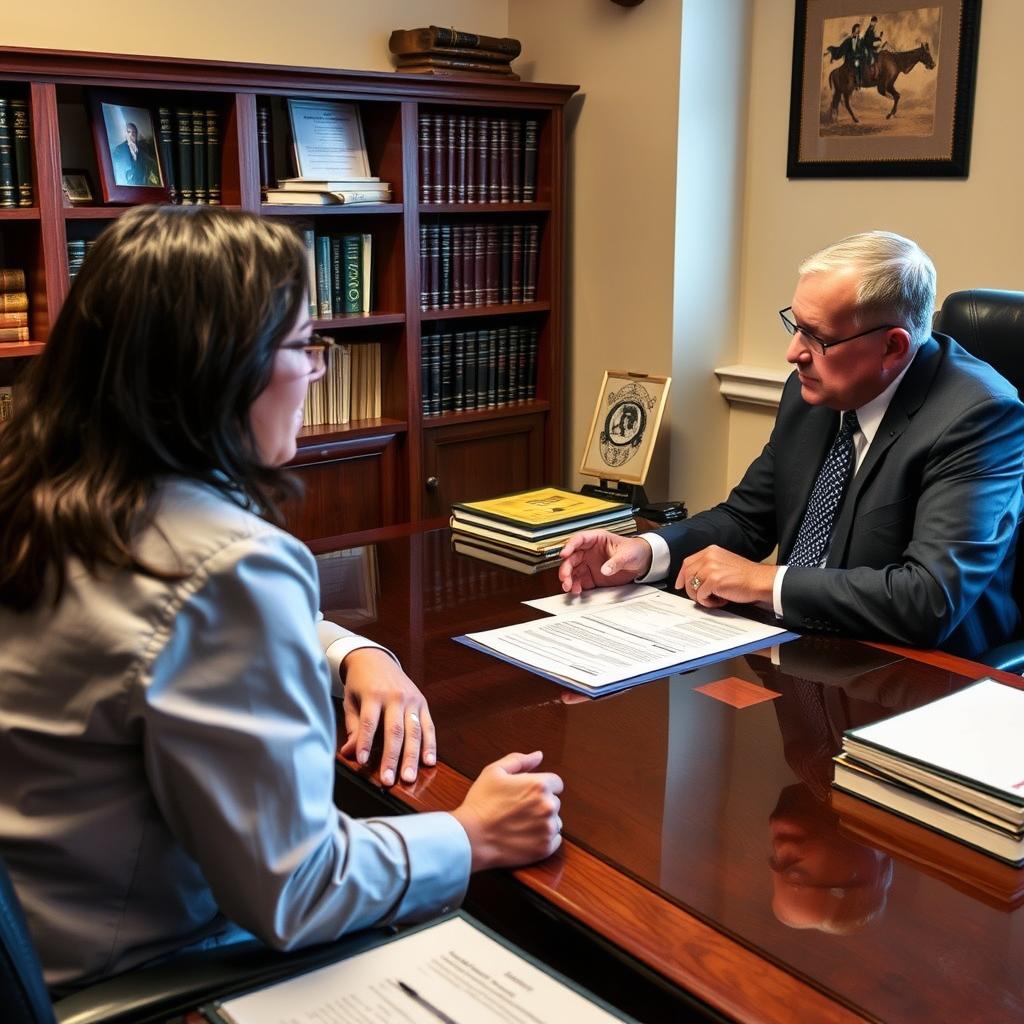
Interstate Compact Lawyer Shenandoah County, VA
The Driver License Compact (DLC), codified at Va. Code § 46.2-483 et seq., is an interstate agreement that coordinates the exchange of driver-license violation information among member states. When a Virginia driver receives a traffic citation in another compact state, or when a motorist licensed elsewhere is cited in Shenandoah County, the compact ensures the home state learns about the violation. That can trigger license suspensions, DMV demerit points, and increased insurance costs—even if the underlying incident occurred hundreds of miles from the driver’s home. For individuals stopped along the I-81 corridor or on the rural roads of Shenandoah County, a compact-related administrative action can feel like a legal puzzle with no clear starting point. Mr. Sris and his Of Counsel handle these matters for clients throughout the Shenandoah Valley, including Woodstock, Edinburg, Strasburg, Mount Jackson, Toms Brook, and New Market. Reach our Shenandoah/Woodstock location at (888) 437-7747. Law Offices Of SRIS, P.C. – Advocacy Without Borders.
What Interstate Compact Matters Mean in Shenandoah County
The Driver License Compact treats traffic offenses as a multi-state concern rather than a local ticket. Under the compact, a conviction for a moving violation—speeding, reckless driving, DUI, or driving on a suspended license—in one member state is reported to the driver’s licensing authority in their home state. Virginia participates in the compact, meaning the Virginia Department of Motor Vehicles (DMV) may take administrative action against a Virginia driver based on an out-of-state conviction. The same principle works in reverse: if you hold an out-of-state license and are convicted of a traffic offense in Shenandoah County, that conviction can be transmitted to your home state’s motor vehicle agency.
Shenandoah County General District Court handles the initial adjudication of most traffic matters, including cases that eventually touch the compact. The court sits within the Twenty-Sixth Judicial District and serves a region crisscrossed by I-81, Route 11, and other state highways that draw commercial drivers, interstate travelers, and local commuters. For a commercial driver’s license (CDL) holder, a single serious traffic violation can lead to a Federal Motor Carrier Safety Administration (FMCSA) disqualification. For a regular license holder, a compact-related action may result in points that linger for years, sometimes triggering suspension if the driver was unaware of the out-of-state proceeding. The firm’s familiarity with Shenandoah County’s court procedures and the DMV’s administrative processes allows Mr. Sris and his Of Counsel to address the full scope of a compact issue, from the courtroom to the driver’s license hearing.
How Mr. Sris and His Of Counsel Handle Interstate Compact Cases
Addressing a compact-based license action requires a clear understanding of both the original traffic charge and the administrative consequences. Mr. Sris and his Of Counsel begin by evaluating the underlying out-of-state or local conviction. If the conviction resulted from a procedural error—for example, the reporting state failed to provide adequate notice or the offense does not qualify as a compact-eligible violation—the DMV’s action may be challenged. In many instances, the firm works to have the charge in Shenandoah County reduced or dismissed altogether, which can prevent an adverse report from being sent to the home state in the first place.
When a client faces a DMV hearing triggered by a compact notification, the firm prepares a comprehensive response. This may include presenting evidence that the out-of-state proceeding lacked due process, that the conviction was not for a moving violation covered by the compact, or that mitigating circumstances warrant a lesser administrative sanction. Because Mr. Sris and his Of Counsel have experience appearing before Shenandoah County General District Court as well as the DMV, they can coordinate the defense across both venues. The approach is methodical and focused on protecting the client’s driving privileges, insurance rates, and, for commercial drivers, their livelihood.
About Mr. Sris and His Of Counsel Team
Mr. Sris, Owner and Founder of Law Offices Of SRIS, P.C., has practiced law since 1997 and is admitted in Virginia, Maryland, the District of Columbia, New Jersey, and New York. A former prosecutor, he brings an understanding of how traffic and criminal cases are built from the government’s perspective. Mr. Sris testified before the Virginia House Courts of Justice Committee in support of 2019 HB 635 (chief patron Del. David Bulova).
Mr. Sris is supported by his Of Counsel, a group of attorneys engaged through Excella who contribute experience in areas ranging from former Virginia State Trooper service to former Maryland prosecution. The firm’s representative outcomes in Shenandoah County include 49 documented traffic-case results: 48 reduced or amended charges and one other favorable disposition. Mr. Sris and his Of Counsel bring extensive combined legal experience. Results may vary.
Frequently Asked Questions
How does the Driver License Compact affect out-of-state drivers ticketed in Shenandoah County?
When an out-of-state driver is convicted of a traffic offense in Shenandoah County, Virginia sends a report of the conviction to the driver’s home-state licensing agency under the Driver License Compact. That home state then applies its own laws to decide whether to impose penalties such as points, a suspension, or a revocation. The impact depends on the nature of the offense—a speeding ticket may trigger a few points, while a reckless driving or DUI conviction can result in a lengthy suspension. Because the compact operates automatically, an out-of-state driver may learn about the Virginia conviction only after receiving a notice from their home state. Addressing the Virginia charge promptly, often with the help of an attorney, can reduce the likelihood that the conviction will be reported.
What are the potential penalties for an interstate compact violation in Virginia?
Penalties for a compact-related action in Virginia are generally administrative, not criminal, and depend on the underlying traffic offense. A Virginia driver facing a compact notification from another state may see DMV demerit points, a license suspension of varying length, or a requirement to file an SR-22 financial responsibility form. The DMV may also impose additional sanctions if the out-of-state offense carries a similar penalty in Virginia. For example, a DUI conviction from another state typically results in the same suspension period that would apply for a first-offense Virginia DUI. The administrative consequences are separate from any fines or jail time imposed in the original case.
Can I challenge a DMV suspension that is based on an out-of-state conviction?
Yes, a Virginia driver may challenge a DMV suspension that stems from an out-of-state conviction by requesting an administrative hearing. The driver has the right to argue that the out-of-state proceeding violated due process, that the offense does not fall within the compact’s reporting scope, or that the DMV’s action is otherwise improper. The hearing is conducted before a DMV hearing officer, and the driver may present evidence, cross-examine witnesses, and be represented by counsel. A successful challenge can result in the suspension being lifted or modified.
What should I do if I receive a compact notice from the Virginia DMV?
Contact an experienced traffic attorney as soon as you receive a compact notice. Do not ignore the notice, because failing to act can lead to a default suspension. Preserve all documents from the original traffic stop or court case, including the citation, any court orders, and proof of payment if the fine was paid. The DMV imposes deadlines for responding, and an attorney can help you prepare a response that addresses both the factual and legal issues.
Do I need a lawyer for an interstate compact hearing in Shenandoah County?
While you are not legally required to have a lawyer, representation can significantly improve the outcome of an interstate compact hearing. A lawyer can identify procedural defects in the underlying case, negotiate with the court or the prosecutor, and present arguments at the DMV hearing that a self-represented driver might overlook. Because compact issues involve both the Virginia court and the driver’s home-state agency, an attorney with experience in both settings can coordinate the defense to protect your driving record and avoid unnecessary license suspensions.
How does an attorney defend against interstate compact charges?
Defense strategies for interstate compact matters often focus on challenging the validity of the underlying conviction, examining whether the compact’s reporting requirements were properly followed, and presenting mitigating evidence. If the original charge can be reduced to a non-compact-qualifying offense—for example, amending reckless driving to improper driving—the obligation to report may be eliminated. At the administrative level, the attorney can argue that the home state should not impose additional penalties because the driver has already satisfied all court-ordered sanctions.
Related traffic defense pages: Clarke County traffic representation · Frederick County traffic defense · Warren County reckless driving assistance · Rockingham County traffic attorney · Augusta County traffic defense services
Virginia primary source references: Virginia Code Title 46.2 (Motor Vehicles) · Shenandoah County General District Court
Attorney advertising. Prior results do not guarantee a similar outcome. Case results depend on a variety of factors unique to each case. Results may vary.