
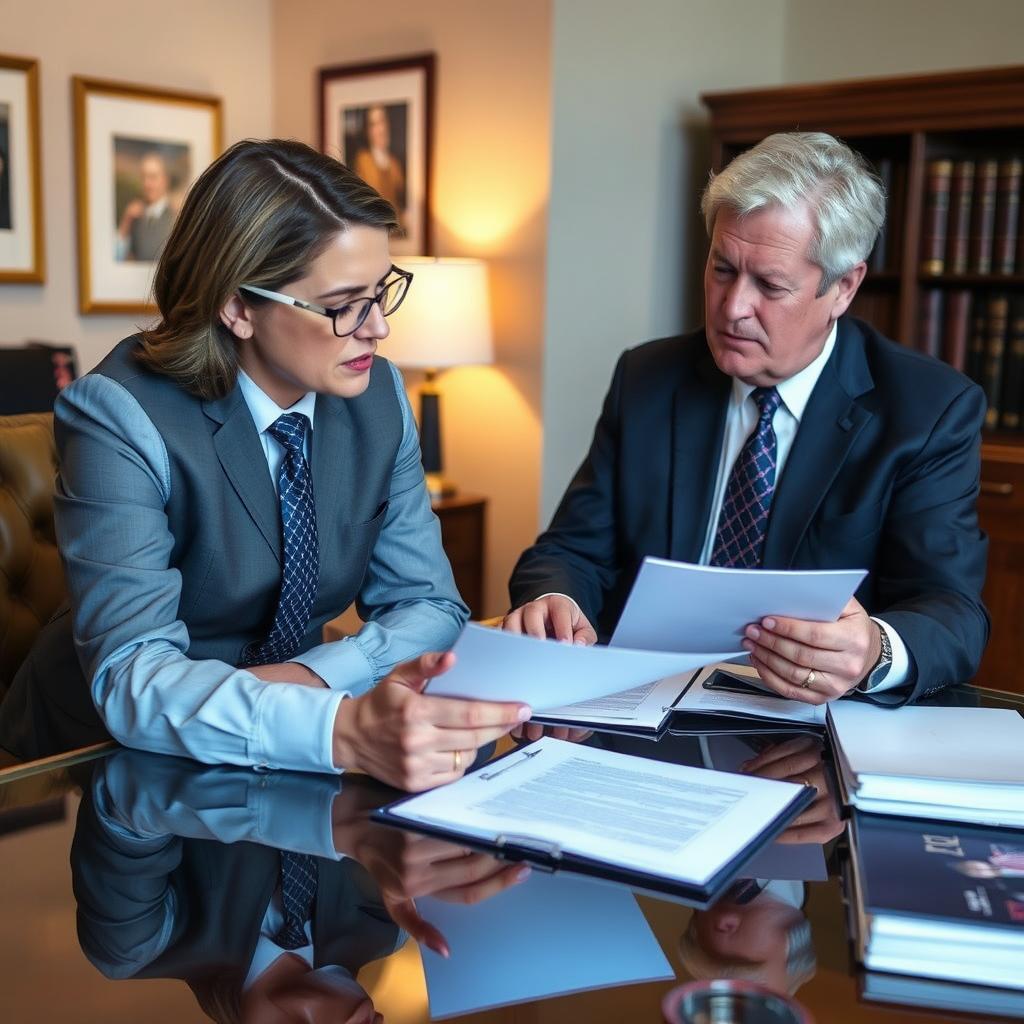
Refusal Lawyer Roanoke County, VA
Refusing a breath or blood test after a DUI arrest in Roanoke County, Virginia, is a decision with immediate and long‑term consequences. Under the Commonwealth’s implied consent law (Va. Code § 18.2‑268.3), a driver lawfully arrested for DUI is deemed to have consented to chemical testing. A refusal triggers an automatic administrative penalty — a one‑year license suspension for a first offense — and subsequent refusals carry escalating criminal charges. Cases are heard at the Roanoke County General District Court, 305 East Main Street, Salem, VA 24153, where the stakes can include a permanent criminal record, increased insurance costs, and loss of driving privileges. Securing representation early is critical. To discuss your situation with a lawyer who concentrates on refusal matters in this county, reach Law Offices Of SRIS, P.C. at (888) 437‑7747. Law Offices Of SRIS, P.C. — Advocacy Without Borders.
How Virginia’s Refusal Laws Affect Drivers in Roanoke County
Virginia’s implied consent framework treats a chemical‑test refusal as a separate and serious matter from the underlying DUI stop. When a driver is arrested on suspicion of driving under the influence, the officer typically reads an implied consent warning explaining that refusal will result in license consequences. If the driver declines, the refusal is reported to the Virginia Department of Motor Vehicles. For a first refusal, the driver faces a civil violation and a mandatory one‑year administrative license suspension — even if the related DUI charge is never filed or is dismissed. A second refusal within ten years is a Class 2 misdemeanor, and a third or subsequent refusal becomes a Class 1 misdemeanor, exposing the driver to fines, jail time, and a criminal record.
In Roanoke County, these cases are adjudicated at the General District Court in Salem. Because the civil suspension operates independently of the criminal case, a driver may need to challenge the administrative suspension through a separate DMV hearing while also defending against any misdemeanor refusal charge. The court’s procedural posture — where the Commonwealth must prove the arrest’s lawfulness and that the driver was properly warned — creates openings for an experienced lawyer to examine the officer’s basis for the stop, the administration of the implied consent warning, and the voluntariness of the alleged refusal. An attorney who regularly appears in the Roanoke County General District Court understands how these issues are received and can frame a defense accordingly.
How Mr. Sris and His Of Counsel Handle Refusal Cases in Roanoke County
Mr. Sris, a former prosecutor, and his Of Counsel take a thorough, step‑by‑step approach to every refusal matter. They begin by scrutinizing the arrest — whether the officer had reasonable suspicion to initiate the traffic stop and probable cause to make the arrest — because an unlawful stop can undermine the entire refusal case. Next, they examine the implied consent warning itself: was it read correctly and in a language the driver understands? If a procedural misstep occurred, it can be grounds to challenge the suspension or the criminal charge. The team then evaluates whether the refusal was, in fact, a refusal under the law or simply a failure to complete the test due to confusion or physical inability.
Once the factual record is assembled, the attorneys work proactively with the Commonwealth’s Attorney. In appropriate circumstances, they may negotiate an amendment that avoids a criminal record or ask the court to consider mitigating facts. At a hearing, Mr. Sris’s experience as a former prosecutor and the team’s familiarity with Roanoke County court practices allow them to present a measured, well‑supported argument. The goal is always to protect the client’s license, avoid a criminal conviction, and minimize the financial and personal disruption that a refusal finding brings.
About Mr. Sris and His Of Counsel Team
Mr. Sris, Owner and Founder of Law Offices Of SRIS, P.C., has been practicing since 1997. A former prosecutor, he brings insight into how the prosecution evaluates refusal cases and what evidence is needed to secure a favorable resolution. He is admitted to practice in Virginia, Maryland, the District of Columbia, New Jersey, and New York. Together with his Of Counsel, Mr. Sris draws on over 120 years of combined legal experience and 4,739+ documented firm-wide results. Results may vary.
Mr. Sris and his Of Counsel have documented favorable outcomes in Roanoke County traffic matters, including refusal cases. Representative results across the county show 34 documented resolutions — 4 dismissed, 28 reduced, and 2 deferred — all resulting in a favorable outcome for the client. Past success cannot predict your case; every matter is unique. Results may vary.
Frequently Asked Questions About Refusal Charges in Roanoke County
What happens if I refuse a breath test in Roanoke County?
Refusing a breath or blood test after a lawful DUI arrest results in a one‑year administrative license suspension for a first offense. The refusal is reported to the DMV, and the suspension takes effect automatically. If you have a prior refusal within ten years, the refusal becomes a criminal charge — a Class 2 misdemeanor for a second offense and a Class 1 misdemeanor for a third — which can bring jail time and a permanent criminal record. Because the civil suspension is separate from any criminal case, you may need to address both through a DMV hearing and court appearances. Contact a lawyer promptly to explore your options.
Can refusal charges be defended in Roanoke County?
Yes, refusal charges can be challenged if the stop was unlawful, the arrest was unsupported by probable cause, or the implied consent warning was not properly given. An attorney will scrutinize the officer’s actions — whether reasonable suspicion existed for the traffic stop, whether the arrest was justified, and whether the driver was clearly warned of the consequences of refusal. Procedural errors can weaken the prosecution’s case and may lead to dismissal of the criminal charge or the suspension. In Roanoke County, an experienced lawyer can present these arguments before the General District Court judge.
How does a Virginia lawyer defend against breath test refusal charges?
Defense strategies for breath test refusal in Virginia often focus on challenging the evidence, examining procedural compliance, and negotiating with the prosecutor. The lawyer will evaluate whether the officer complied with the implied consent statute, whether the driver’s refusal was knowing and voluntary, and whether any medical or language barriers affected the interaction. When the facts allow, the attorney may seek an amendment from the Commonwealth’s Attorney or argue for a reduced consequence. The goal is to avoid a criminal record and preserve driving privileges.
What should I do if I am facing refusal charges in Roanoke County?
Contact a traffic attorney immediately and do not discuss the case with anyone except your lawyer. The administrative suspension begins quickly, and any statements you make to law enforcement can be used against you. Gather any documents related to the arrest — the summons, the implied consent warning form, and any witness information. An attorney can advise you on whether to request a DMV hearing to contest the suspension and can begin building your defense in the Roanoke County General District Court.
Will refusing a breath test affect my driver’s license?
Yes, refusing a breath test triggers an automatic administrative suspension of your Virginia driver’s license for one year. This suspension runs independently of any criminal consequences and is imposed by the DMV. You have a limited time to request a hearing to challenge the suspension. If you fail to request a hearing or the hearing is unsuccessful, the suspension will go into effect. An attorney can help you navigate the DMV process and argue that the refusal was not knowing or voluntary.
Is refusal a criminal offense in Virginia?
A first refusal is a civil violation — not a criminal offense — but it carries a mandatory one‑year license suspension. A second refusal within ten years is a Class 2 misdemeanor, punishable by up to six months in jail and a fine. A third or subsequent refusal is a Class 1 misdemeanor, with penalties of up to twelve months in jail and higher fines. The criminal classification matters for employment, insurance, and immigration purposes, making it essential to challenge any refusal charge.
What happens at a refusal hearing in Roanoke County?
At the refusal hearing in the Roanoke County General District Court, the judge reviews the evidence to determine whether the refusal was lawful and properly charged. The Commonwealth must prove that the arrest was valid and that the driver was adequately warned. Your attorney can cross‑examine the arresting officer, present evidence of procedural errors, and argue for a dismissal or reduction. The hearing is typically a bench trial where the judge decides the outcome based on the facts and the law.
Does refusing a breath test impact a CDL holder in Virginia?
Yes, a refusal can have severe consequences for commercial driver’s license (CDL) holders. Virginia law imposes a one‑year CDL disqualification for a first refusal and a lifetime disqualification for a second. These disqualifications apply even if the refusal occurs in a personal vehicle and regardless of whether the related DUI charge is resolved. A CDL holder facing refusal allegations should consult an attorney who understands both the traffic and licensing dimensions of the case.
How does a refusal affect an out‑of‑state driver charged in Roanoke County?
An out‑of‑state driver who refuses a breath test in Virginia still faces a one‑year Virginia license suspension and potential criminal charges if it is a repeat offense. Virginia’s implied consent law applies to all drivers on its roads. The suspension is typically transmitted to the driver’s home state through the Interstate Driver’s License Compact, which may result in a parallel suspension there. An attorney who handles refusal cases in Roanoke County can appear in court on the driver’s behalf, minimizing the need for travel.
Do I need a lawyer for a refusal charge in Roanoke County?
While a first refusal is a civil matter, the automatic license suspension and the risk of criminal escalation make seeking legal representation a wise step. An attorney can request a DMV hearing to contest the suspension, negotiate with the prosecutor to avoid criminal charges, and guide you through the court process. The long‑term costs of a suspension or a misdemeanor conviction — higher insurance premiums, employment limitations, and a criminal record — often outweigh the cost of a lawyer. For a consultation specific to your case, reach Law Offices Of SRIS, P.C. at (888) 437‑7747.
Our traffic lawyers also serve clients in other Virginia localities: Fairfax County, Fairfax City, Falls Church, Prince William County, and Manassas.
Additional authority: Va. Code § 18.2‑268.3 (Implied consent / refusal) · Roanoke County General District Court · Virginia Judicial System
Attorney advertising. Prior results do not guarantee a similar outcome. Results may vary.
Case results depend on a variety of factors unique to each case.